Call us on

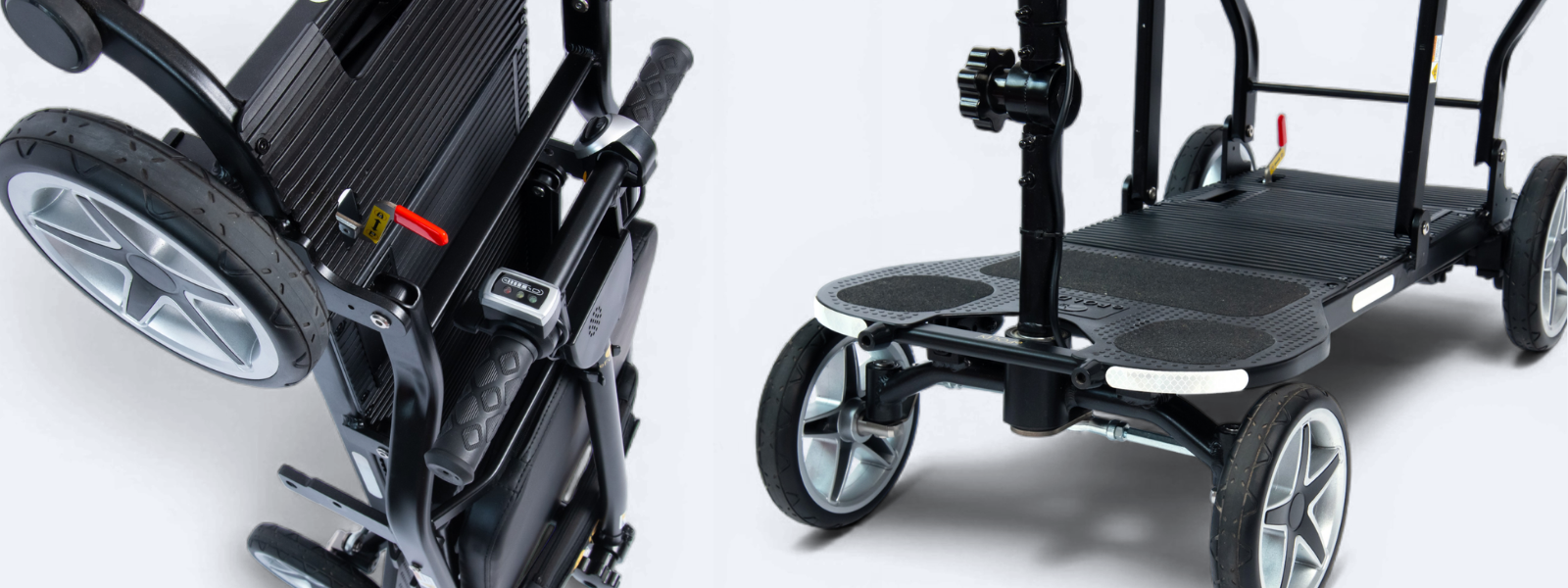
For a folding mobility scooter or powerchair to be genuinely useful, it must be light enough to lift, strong enough to feel reassuring and durable enough for everyday use. It needs to cope with being folded, transported, stored, lifted into car boots and used in different environments without feeling fragile.
That is why eFOLDi chooses magnesium alloy for its lightweight folding mobility products.
Magnesium alloy gives eFOLDi the balance it needs: low weight, strength, structural integrity and durability. It helps create products that are portable enough for everyday independence, but robust enough for the way people actually use them.
This is not about following material trends or chasing the lowest possible number on a specification sheet. It is about choosing a material that suits folding, lifting, travel and everyday use.
Why magnesium alloy?
Magnesium alloy is valued in lightweight engineering because it offers a rare combination of low weight, strength and rigidity.
It is around a third lighter than aluminium by density, which makes it a strong choice for products where every kilogram matters. But its benefit is not just weight. Magnesium alloy also has the structural strength needed to support carefully engineered frames, making it well suited to products that need to be light, stable and durable.
It also lends itself to complex, precision-designed components, which is particularly important in folding mobility products where the frame has to work alongside hinges, joints, fixings and moving parts.
Magnesium alloy is a thin, strong metal that absorbs impact well. In practical terms, this means that when a lightweight folding mobility product is used across rougher everyday surfaces, the material can help absorb some of the impact, rather than creating the rigid feel often associated with carbon fibre.
For eFOLDi, those qualities make magnesium alloy a natural choice for its lightweight folding mobility products.
Why not carbon fibre?
Carbon fibre is strong and light, and it has its place. But for powered folding mobility products, eFOLDi has to look beyond headline weight.
Carbon fibre can behave differently from metal under sharp impact or concentrated stress, particularly where forces are concentrated around joints, fixings or connection points. Structural damage may also require specialist assessment.
It may not always show obvious signs of damage after impact, as cracks or internal structural damage can sometimes be difficult to detect visually. This can create additional inspection and safety considerations in everyday mobility use.
Carbon fibre can also be less straightforward to assess and repair. Where structural damage is suspected, specialist inspection may be needed and replacement may be more practical than repair.
It can also create additional design considerations where metal fixings, hinges and connectors are used, including galvanic corrosion risk if carbon fibre is in contact with metals and moisture is present.
By contrast, the metal alloys used in eFOLDi’s lightweight folding mobility products are treated from the outset to help protect against corrosion.
For eFOLDi, magnesium alloy offers the right balance of low weight, strength, durability and real-world usability. The priority is not choosing the material that sounds most high-tech. It is choosing the material best suited to folding, lifting, transport and everyday powered mobility.
Why not just use solid alloy?
Another common question is why lightweight mobility products are not made from solid alloy throughout. The answer is simple: they would become far too heavy.
Good lightweight design is not about using more material. It is about using the right material in the right way. The structure has to be carefully engineered to achieve strength and stability without adding unnecessary weight.
eFOLDi’s folding structures are also unique and patent protected in market countries, with products independently tested by SGS, one of the most renowned testing companies in the sector. This includes 200,000 vibration cycles at maximum load to validate safety and durability.
If solid alloy were used throughout a lightweight folding scooter, the finished product would become dramatically heavier. That would undermine the very reason many customers choose a folding mobility product in the first place.
For eFOLDi, the aim is not to make products heavier in the name of strength. It is to engineer them intelligently, so users get the benefit of portability without losing confidence in the product.
The right material for the job
For eFOLDi, magnesium alloy is not about adding a premium-sounding material to a product specification. It is about choosing a material that supports the way lightweight folding mobility products are actually used.
By combining low weight with strength and durability, magnesium alloy helps eFOLDi create products that are portable, reassuring and built for everyday mobility.