Call us on

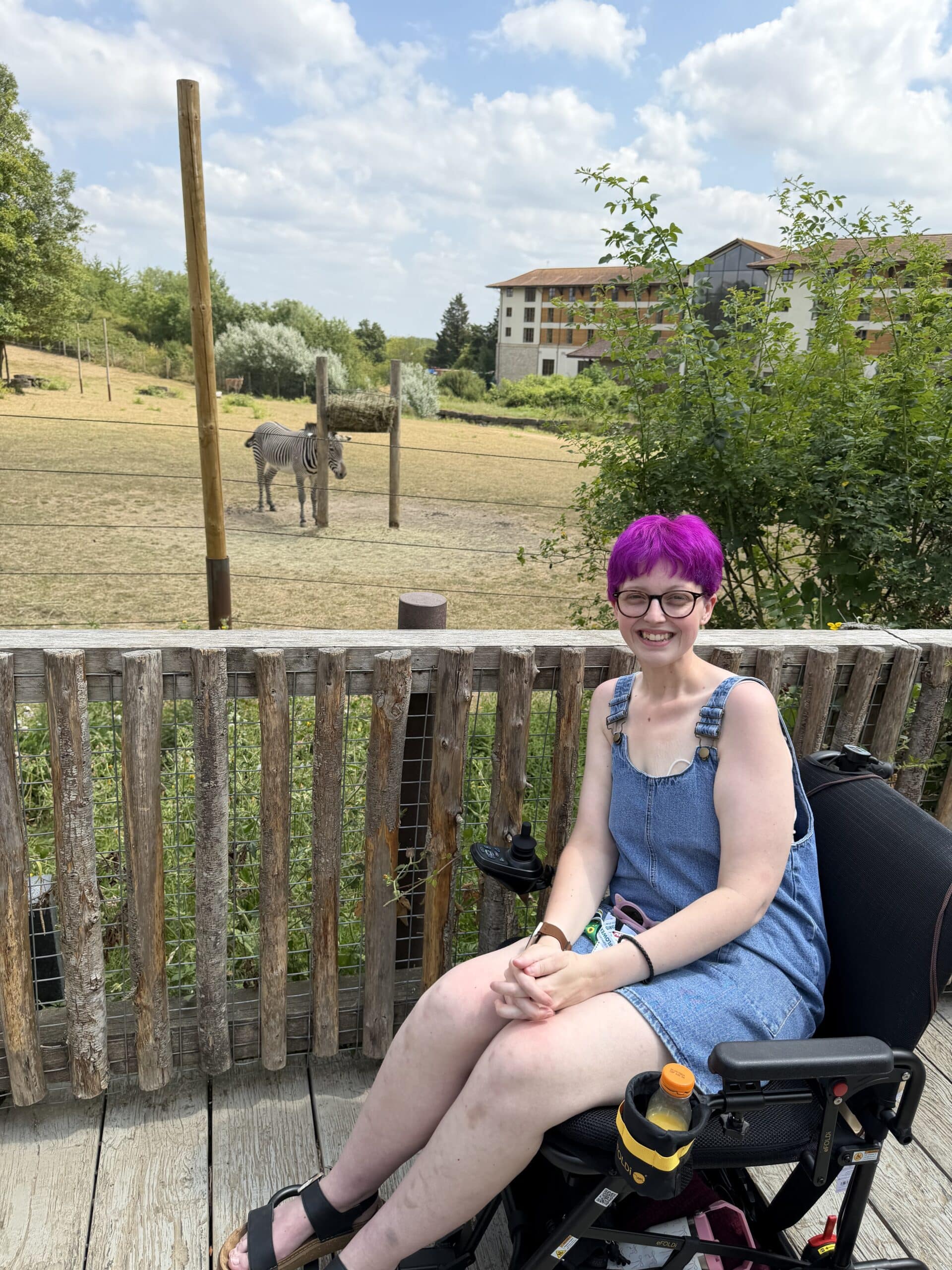
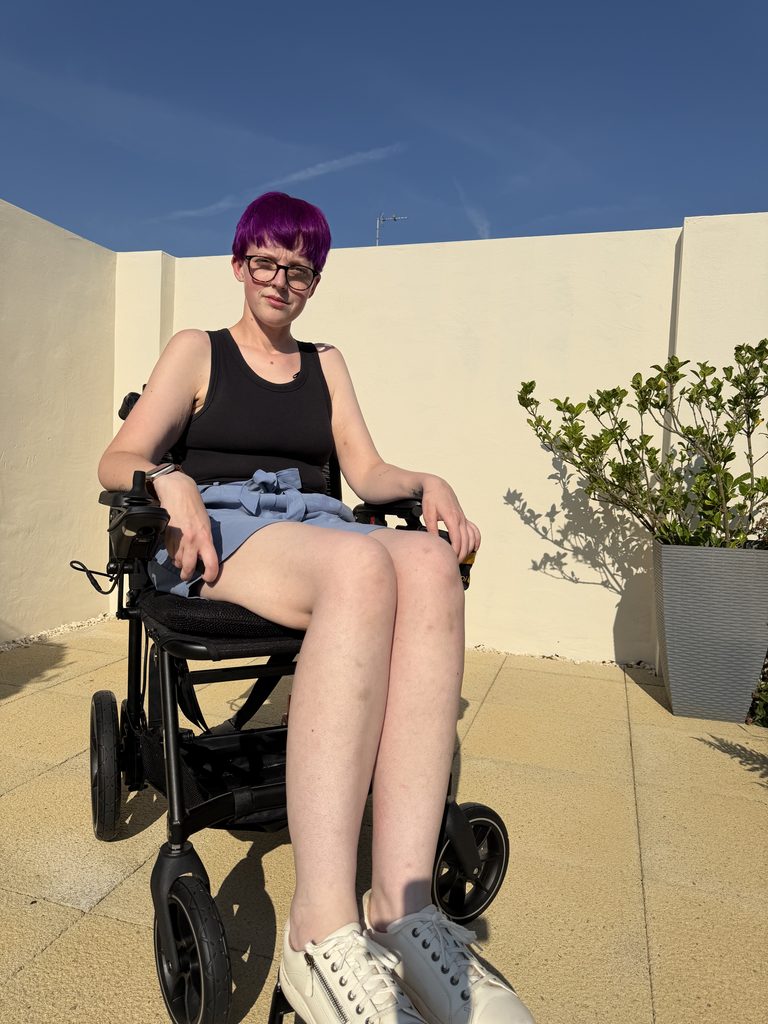
At 29, Leah lives with several chronic health conditions that affect her mobility, energy levels and everyday life. Using an eFOLDi Navigator powerchair helps her conserve energy for spending time with friends, enjoying days out and doing the things that matter to her. Her story shows why being able to walk is only part of the picture when someone is considering a mobility aid.
Living With an Invisible Disability
Leah has Ehlers-Danlos syndrome, POTS and gastroparesis. She describes how her conditions affect her joints, circulation and energy levels. She receives her nutrition through TPN, and conserving the energy she has each day is particularly important to her. Leah says even walking requires concentration because of the risk of falls associated with her joints, while episodes of POTS can leave her completely exhausted. Many of these challenges are not immediately visible to other people.
Like many people living with an invisible disability, Leah says one of the hardest things is other people’s assumptions. “The saying ‘not all disabilities are visible’ is used a lot, but it’s not understood enough,” she says. She is regularly questioned when using her Blue Badge and says people can also be curious about why someone her age is using a powerchair.
For a long time, Leah questioned it herself, wondering whether she was ‘disabled enough’ to use a mobility aid and worrying about how other people, including her friends, might react. Looking back, she now feels those concerns stopped her from getting help that could have made life easier much sooner.
The turning point came after a planned day out left her unwell on the journey home and needing around two weeks to recover. While she was in bed recovering, Leah saw an advert for a mobility scooter and found herself wondering whether using one could have changed the experience.
How Does Leah’s Powerchair Help Her Conserve Energy?
For Leah, using her eFOLDi Navigator reduces the energy she spends walking and concentrating on avoiding falls. That leaves her more energy for the reason she wanted to go out in the first place. “The energy I’ve got when I wake up in the morning is the energy I’ve got for the day,” she explains. “Using my Navigator means I’m not using that energy walking, but I’m also not using energy concentrating on where I’m walking to try to prevent falls.”
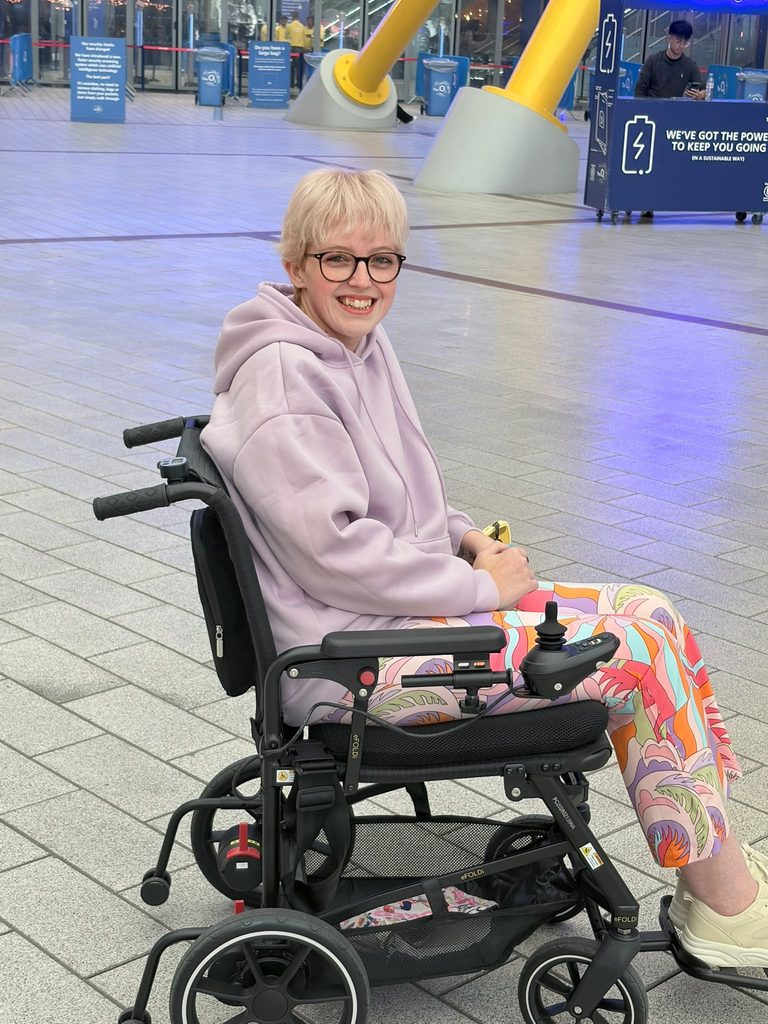
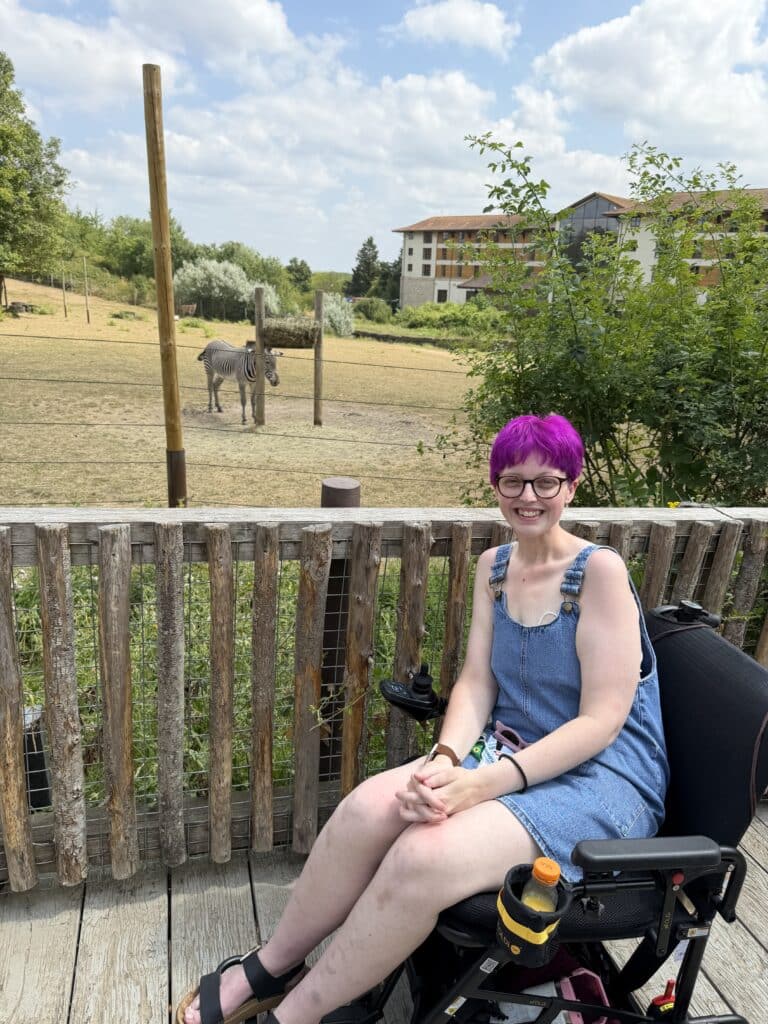
The Navigator is already helping Leah take part in experiences that she believes would previously have been too physically and mentally exhausting. She has enjoyed an overnight trip to Chessington World of Adventures with her goddaughter and has also been to a concert at The O2, where she used the wheelchair accessible platform.
Rather than arriving just before the performance to conserve as much energy as possible, Leah was able to get there earlier, look around and spend time with friends while they had dinner. During the concert, she remained comfortably seated in her Navigator, which she says was also easier on her joints.
Using a Powerchair When Walking Is Still an Option
On days when Leah may still be able to walk, having her Navigator available gives her what she describes as “comfort and confidence”. For her, the decision is about how much energy walking will use and what that means for the rest of her day. Instead of constantly weighing up whether an activity will use too much energy, she has another option. It is those everyday choices that are making the biggest difference.
What Does Leah Value About Her eFOLDi Navigator?
From a practical point of view, Leah particularly values the Navigator’s ease of use. With several fingers fused in fixed positions, she finds the controls easy to operate, while the tight turning circle helps her manoeuvre in different environments. She also finds its lightweight design manageable when getting it in and out of the car. These are the features that work well for Leah’s own needs and help her feel more confident about getting out and about.
There are still plenty of things she wants to do. Christmas is her favourite time of year and, having previously ruled out Christmas light trails because of the amount of walking involved, one is now firmly on her list.
Leah’s Advice to Someone Considering a Mobility Aid
Her advice to another younger person wondering whether they are ‘too young’ or ‘not disabled enough’ to use a mobility aid is simple: “Don’t judge yourself. If you can seriously see how a mobility aid can help you, then go for it. It doesn’t matter what you use or how you use it, as long as it gives you the life you want.”
For Leah, using a powerchair is not about giving something up. It is about using the energy she has for the people, places and experiences that matter.
Explore the eFOLDi Navigator and find out whether it could suit your mobility needs.